

Dissolution of the Kishida Administration: A Boon for Religious Freedom in Japan?
Under Kishida, Japan went through the worst religious liberty crisis in its recent history. Will his successor improve the situation?
by Dr. Michael Mickler
Republished from Bitter Winter article 27th Aug. 2024
 Dr. Michael Mickler. Photo: Personal
 Announcing that he would step down. On August 14, 2024, Prime Minister Kishida held a press conference regarding his decision not to run for the Liberal Democratic Party presidential election, at the Prime Minister’s Office. Photo: 首相官邸 (PMO) / Wikimedia Commons. License: CC Attr 4.0 Int. Cropped
Japanese Prime Minister Fumio Kishida’s administration championed the dissolution of the Family Federation/Unification Church (UC) in Japan, but the initial result has been its own dissolution. At a press briefing on August 14, Kishida announced that he would step down as leader of Japan’s ruling Liberal Democratic Party (LDP) in September. But whether his resignation will halt actions that have had a chilling effect on religious freedom in Japan is an open question.
Outrage against the Family Federation, and repressive measures against unpopular religious groups generally, escalated following the assassination of former Prime Minister Shinzo Abe on July 8, 2022. The assassin told investigators that he shot Abe in retaliation for Abe’s support of the Unification Church and that he held a grudge against the church over his mother’s donations more than twenty years previously.
Japanese media subsequently exposed ties between the Unification Church and the LDP.
The Kishida administration reacted with vengeance. On August 31, 2022, the LDP stated it would no longer have any relationship with the Unification Church and its associated organizations. On October 16, Kishida announced that the government would open an investigation into the Family Federation and three days later reversed legal precedent by stating that civil complaints rather than criminal violations could serve as a basis of dissolution. On October 13, 2023, the Kishida administration petitioned the Tokyo District Court to issue an order to dissolve the Family Federation.
The Kishida administration did not only target the Family Federation. Related legislation carried a more general anti-religious animus. In December 2022, the Japanese Diet passed a Prevention of Unfair Solicitation of Donations by Corporations Act, which granted broad recovery rights to those claiming to be victims of “mind control” as well as to relatives and others objecting to donations on grounds of mind control.
The Ministry of Health, Labor, and Welfare then issued new guidelines on “the religious abuse of children”. Drafted in consultation with the Japanese Society for Cult Prevention and Recovery (JSCPR), the guidelines had the immediate effect of generating a climate of discrimination and hate against the Jehovah’s Witnesses who reported a 638% increase in hate crimes in 2023 as compared to the previous six years.
 UN Special Rapporteur: Clément Nyaletsossi Voule. Photo: Bitter Winter
 UN Special Rapporteur: Irene Khan. Photo (2024): Juan Carlo Ruff for the Philippine Information Agency / Wikimedia Commons. Public domain image. Cropped
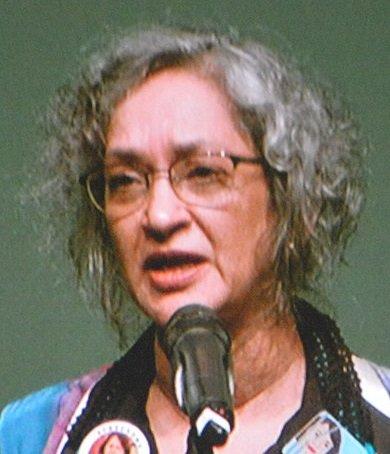 UN Special Rapporteur: Farida Shaheed. Photo (2016): Wotancito / Wikimedia Commons. License: CC ASA 4.0 Int. Cropped
 UN Special Rapporteur: Nazila Ghanea. Photo (2023): FOREF
This came to the attention of four UN Special Rapporteurs who sent an official letter to the government of Japan expressing concern over the “stigmatization of some religious or belief minorities,” a situation they described as “warranting immediate action.”
Still, concerns expressed by the international human rights community did not prompt Kishida’s resignation. Japanese were mostly dissatisfied with his handling of financial scandals within the LDP. Essentially, he adopted a cancel-culture approach, removing cabinet ministers and dissolving party factions rather than engaging underlying problems. This paralleled his approach to “societally problematic” groups such as the Family Federation and Jehovah’s Witnesses. In the end, he cancelled himself.
The question remains whether Kishida’s resignation will improve the situation. This will to some extent depend upon his successor. However, negative “cult” stereotypes and systemic barriers to religious freedom in Japan should not be underestimated.
 Levi McLaughlin. Photo (2020): Johan Jönsson / Wikimedia Commons. License: CC ASA 4.0 Int. Cropped
Japan religion expert Levi McLaughlin points out a distinction in Japanese culture between “good religion” embedded in Japanese “culture, custom, spirituality, tradition, or another safe tradition” and “aberrant sects, misleading superstitions, nefarious cults, and other heterodoxies.” These minority groups account for what he describes as Japan’s “unease with religion” and trigger periodic “moral panics.”
Conformist tendencies that characterize Japan’s judiciary and media accentuate social prejudices. Critics of the Japanese court system have highlighted its restraint toward actions of the executive and legislative branches of government, its lack of transparency (Japan does not utilize juries, and proceedings are private), and a presumption of guilt culture in which government prosecutors win 99.9% of criminal cases and 98% of appeals. This has implications for the Family Federation dissolution case brought by the Kishida administration.
Japan has the lowest ranking among G-7 nations on media freedom. Restrictive, government-approved “Kisha kurabu,” or press clubs are a major reason for this. Once the government distances itself from an unpopular group, or labels it a social evil, reporters limit themselves to one-sided, negative stories. “Near universal censorship,” according to one account, has resulted in a “press disaster” and “information disaster” for the Family Federation in Japan.
 Dr. Katrina Lantos Swett speaking at International Religious Freedom Summit in Washington DC 31st January 2024. Photo: Screenshot from live transmission
Katrina Lantos Swett, former Chair of the U.S. Commission on Religious Freedom, has used the metaphor of “drunk drivers” to describe democratic countries that pursue misguided crusades against marginal religions. It’s questionable whether Kishida’s resignation signals a new day for religious freedom in Japan. It does signify that Japan will have a new, hopefully soberer designated driver.
Featured image above: On August 14, 2024, Prime Minister Kishida held a press conference regarding his decision not to run for the Liberal Democratic Party presidential election, at the Prime Minister’s Office. Photo: 首相官邸 (PMO) / Wikimedia Commons. License: CC Attr 4.0 Int. Cropped
The article has also been published by Bitter Winter on 27th August 2024.
Related to boon for religious freedom?: Inhuman Government-Supported Mass Deprogramming
More, related to boon for religious freedom?: Collusion to Rob Minority of Its Rights
And more, related to boon for religious freedom?: State and Media Creating “Today’s Non-Citizens”
Still more, related to boon for religious freedom?: Japan Criticized for Glaring Rights Violations
Even more, related to boon for religious freedom?: Japan Following the Way of China
And still more, related to boon for religious freedom?: 12 Religious Freedom NGOs Denouncing Japan
And even more, related to boon for religious freedom?: Conference on Religious Freedom Violations
Still more, related to boon for religious freedom?: Japan: Threat to Religious Freedom
Even more, related to boon for religious freedom?: Call to End Witch Hunt
More, related to boon for religious freedom?: Government’s Foul Play Pointed Out
More, related to boon for religious freedom?: Japan: 4300 Abductions and Forcible Detentions
And more, related to boon for religious freedom?: Illegalities of Activist Lawyers Exposed
Yet more, related to boon for religious freedom?: Lawyers Manipulating, Coercing, Lying
Still more, related to boon for religious freedom?: Biased Information from Leftwing Lawyers
Even more, related to boon for religious freedom?: Dangerous Precedent to Crush Religions
Even more, related to boon for religious freedom?: Kyodo News: 100s of Rights Violations Claimed
Even more, related to boon for religious freedom?: Fabricated Torts Part of Wily Strategy in Japan


