

 Intensely persecuted, even by government representatives: Shincheonji Church of Jesus. Here, its logo.
 Intensely persecuted, even by government representatives: Family Federation for World Peace and Unification. Here its logo
Ill-boding public comments on religious freedom and faith minorities by South Korean Minister of Justice promising strict punishment for “heretics”
The relationship between religion and politics has long been one of the defining tests of democratic societies. While constitutional systems generally seek to prevent the state from establishing or favoring a particular religion, they also recognize that believers retain the same civil and political rights as every other citizen. Religious leaders and communities may express opinions on public affairs, encourage civic engagement, and participate in democratic processes within the limits of the law. The challenge lies in ensuring that the principle of separation between religion and state does not become a pretext for restricting religious liberty or discriminating against unpopular faiths.
See also “Church Closure” Risks in South Korea’s New Bill
See also Mother Han: Prosecutors Seek 13-Year Sentence
See also Editorial Challenges Prosecution of Mother Han
See also Mother Han: Beyond One Trial – the Wider Stakes
See also Statement Ahead of Final Hearing for Mother Han
See also New Law, New Standards for Religious Reporting
This debate has become increasingly significant in East Asia, particularly in South Korea and Japan, where several new religious movements have found themselves being intensely persecuted, even by the authorities. In recent years, organizations such as Shincheonji Church of Jesus and the Family Federation for World Peace and Unification (formerly known as the Unification Church, in Korea referred to as Unificationism) have faced criminal investigations, civil actions, and growing public hostility. Critics have argued that these measures are necessary to protect democratic institutions and vulnerable individuals. Defenders, however, have warned that governments are moving beyond legitimate law enforcement toward policies that stigmatize minority religions and undermine internationally recognized standards of religious freedom.
 Logo of Bitter Winter, the world’s leading online magazine on religious liberty and human rights.
 Dr. Massimo Introvigne, Italian sociologist of religion, founder of CESNUR, specializing in new religious movements and religious liberty. A prolific author, he has advised governments and international bodies, and served as OSCE Representative on combating racism, xenophobia, and intolerance against Christians worldwide and comments on contemporary religious controversies. Here speaking at the UN Office at Geneva on 16th June 2025. Screenshot from video by UPF.
In an opinion article published in Bitter Winter on 2nd July 2026, sociologist of religion Dr. Massimo Introvigne examines what he regards as a troubling illustration of this trend. His commentary focuses on a Facebook post by South Korea’s Minister of Justice, Jeong Seong-ho (정성호), concerning the detention of Shincheonji Chairman Lee Man-hee (이만희 – 95) and the broader treatment of religious minorities in South Korea. According to Introvigne, the Minister’s public statements reveal not only a particular interpretation of the constitutional relationship between religion and politics but also a willingness to prejudge ongoing legal proceedings against religious leaders.
Introvigne begins by highlighting the detention of Lee Man-hee, who, at ninety-five years of age, has been indicted on allegations that he orchestrated the registration of more than 50,000 Shincheonji members in a political party during various elections.
The government argues that these actions amounted to political interference and violated the constitutional principle separating religion and state. Introvigne questions both the factual basis and the legal implications of these accusations. He notes that participation in political parties and elections is ordinarily regarded as a fundamental democratic right enjoyed by all citizens, including members of religious communities. He also observes that the allegation that thousands of believers were “forcibly” registered is asserted without a clear public explanation of how such coercion allegedly occurred.
 Recent Facebook post by South Korean Minister of Justice Jeong Seong-ho. Photo: Bitter Winter
The article then turns to the broader implications of the Justice Minister’s statements. Introvigne argues that Jeong’s description of religious organizations as communities intended solely for “inner peace and spiritual comfort”, rather than participants in public life, reflects an unduly restrictive understanding of religious freedom. In democratic societies, he contends, religious believers are not expected to abandon their civic identities upon entering a place of worship. Rather, they remain citizens with the right to vote, advocate for policies, and participate in political debate, provided they comply with the law. To suggest that religion must remain confined to a purely private or spiritual sphere, Introvigne argues, risks narrowing the scope of freedoms protected in democratic constitutions.
Another major concern raised in the article involves the Minister’s invocation of developments in Japan. Jeong cites the dissolution order issued against the Family Federation by Japan’s Supreme Court as evidence supporting a firm response to religious organizations that allegedly interfere in politics. Introvigne argues that this comparison is misleading because, in his view, the Japanese court’s decision was based on issues unrelated to political ties with the ruling party. He therefore criticizes the Minister for conflating media narratives with the contents of judicial decisions.
In light of proposed South Korean legislation that could permit the rapid dissolution of religious organizations whose leaders are convicted of crimes or deemed to have improperly influenced politics, Introvigne considers such statements especially significant as he points outs,
“It is troubling that a Minister of Justice confuses media narratives with judicial documents. In South Korea, a draft law is pending that would authorize swift dissolution of religions whose leaders have been sentenced or that ‘interfere in politics’. In this context, the Minister’s misrepresentation of the Japanese decision acquires a sinister tone.”
The article also questions the propriety of the Minister publicly declaring that “strict criminal punishment” is inevitable before the completion of judicial proceedings. Introvigne maintains that justice ministers should safeguard the impartiality of the legal system rather than pronounce guilt in advance of trial.
He further criticizes Jeong’s decision to conclude his Facebook post by quoting Matthew 7:15 – “Beware of false prophets, who come to you in sheep’s clothing but inwardly are ravenous wolves” – to describe religious leaders under investigation. According to Introvigne, this use of Scripture in an official governmental communication creates an apparent contradiction: while accusing certain religious groups of improperly mixing religion and politics, the Minister himself invokes religious authority in support of a political and legal position.
 Lee Man-hee (이만희 – 95), founder and chairman of Shincheonji (New Heaven and Earth). Photo: MBC PD수첩 / Wikimedia Commons. License: CC Attr 3.0 Unp
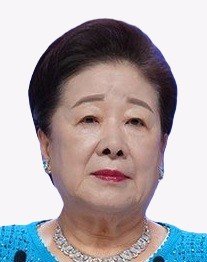 Hak Ja Han (한학자 – 83), aka Mother Han, Co-Founder of the Family Federation for World Peace and Unification. Photo: FFWPU
Finally, Introvigne broadens his discussion to include the continued detention of Family Federation leader Hak Ja Han (한학자), who is eighty-three years old and reportedly remains hospitalized while under official supervision. He observes that both Lee Man-hee (이만희) and Hak Ja Han are elderly religious leaders enduring prolonged detention on allegations related to political activity rather than violence. This circumstance, he argues, raises humanitarian as well as legal concerns. While stopping short of asserting specific motives, he suggests that the treatment of such elderly defendants invites questions about proportionality and due process.
The article concludes by placing these developments within the longer history of religious persecution. Introvigne argues that governments and political movements are ultimately transient, whereas religious communities have repeatedly survived periods of discrimination and repression. Whatever the outcome of the present legal disputes, he suggests that the broader principles of religious liberty, due process, and equal participation in democratic society remain central to evaluating the actions of modern democratic states.
See also “Church Closure” Risks in South Korea’s New Bill
See also Mother Han: Prosecutors Seek 13-Year Sentence
See also Editorial Challenges Prosecution of Mother Han
See also Mother Han: Beyond One Trial – the Wider Stakes
See also Mother Han: The Dangers of Guilt by Position
See also Religion-State: The Danger of Policing Belief
See also Statement Ahead of Final Hearing for Mother Han
See also New Law, New Standards for Religious Reporting
Text: Knut Holdhus, editor
Featured image above: South Korean Minister of Justice Jeong Seong-ho (정성호 – also anglicized as Chung Sung-ho). Photo: 대한민국 국회 / Wikimedia Commons. Korea Open Government License Type 1. Cropped
Related to quoting Bible against “heretics”: Religion Between Engagement and Withdrawal
Also related to quoting Bible against “heretics”: South Korea’s Slide Toward Authoritarianism
And also related to quoting Bible against “heretics”: Shocking Pretrial Detention of Faith Leader (95)
More, related to quoting Bible against “heretics”: State Failure and Non-State Peace Projects
And more, related to quoting Bible against “heretics”: Korea: Can Religion and Politics Be Disentangled?
Also related to quoting Bible against “heretics”: A 10-Minute Visit to Mother Han in Detention
Even more, related to quoting Bible against “heretics”: Denying Allegations: Hak Ja Han (82) in Inquiry
Also related to quoting Bible against “heretics”: SKorean Court’s Sharp Criticism of Prosecutors
And also related to quoting Bible against “heretics”: Detention: Harsh Cell Conditions Spark Outcry
More, related to quoting Bible against “heretics”: Ugly: Arrest Warrant Sought for Hak Ja Han (82)
And more, related to quoting Bible against “heretics”: Critics Warn of “Authoritarian Drift” in SKorea
Even more, related to quoting Bible against “heretics”: Court Decision to Prolong Detention Condemned
Still more, related to quoting Bible against “heretics”: Co-Founder, 82, Questioned 9 Hours by Prosecutors
Also related to quoting Bible against “heretics”: Democratic Party’s Assault on Family Federation
And even more, related to quoting Bible against “heretics”: Mother Han (82) in Poor Health in Damp, Cold Cell
And still more, related to quoting Bible against “heretics”: Korean Crisis: “True Democracy Must Serve Heaven”
And yet more, related to quoting Bible against “heretics”: Faith Leaders Protest State Assault on Religion
And more, related to quoting Bible against “heretics”: Trump Raises Alarm Over Church Raids in Korea
Even more, related to quoting Bible against “heretics”: Mike Pompeo Calls Probe of Co-Founder “Lawfare”
Still more, related to quoting Bible against “heretics”: Korean Faith Crackdown: USA Urged to Confront It
Yet more, related to quoting Bible against “heretics”: Korean Bribery Scandal: Media Clears Federation
And also related to quoting Bible against “heretics”: Raids Blur Line Between Justice and Politics
More, related to quoting Bible against “heretics”: Heavy-Handed Raid on Sacred Sites Condemned


