

Gullible Japanese authorities persuaded by “cult experts” to adopt extreme measures against large faith minority Family Federation specifically targeting children of affiliated parents
 Logo of Bitter Winter, the world’s leading online magazine on religious liberty and human rights.
Continued from Japan’s Next Step: Indoctrination of Children
In the third article of her four-part series on the treatment of the Family Federation for World Peace and Unification (formerly known as the Unification Church) in Japan following the government’s dissolution proceedings, international human rights lawyer Patricia Duval examines what she regards as a particularly important issue: policies affecting children raised in Family Federation households.
See also When Raising Children in Faith Turns Suspicious
See also Dissolution Case: Pseudoscience Shaping Verdict
See also: Verdict Under the Shadow of “Mind Control” Myth
See also Brussels Press Conference Condemns Dissolution
See also Brainwashing Theory Returns Under New Names
See also Corporation Dissolved – Organization Remains
See also: The Contradictions of the Dissolution Order
Published on 3rd June 2026 in Bitter Winter, the world’s leading online magazine on human rights and religious freedom, the article contends that the Japanese government’s response to controversies involving the Family Federation has expanded beyond legal measures directed at the religious organization itself. According to Duval, it now includes educational programs, counseling services, and child-protection initiatives specifically targeting minors whose parents are affiliated with the movement.
Child Protection Measures and Family Separation
One of the most controversial aspects examined in the article concerns child-protection mechanisms that could lead to restrictions on parental authority.
 From the “SOS Mini Letter.” One example of abuse is “Because of my parents’ religion I cannot participate in sport events.” Photo: Bitter Winter
Duval explains that official procedures permit authorities to investigate situations in which “child abuse related to religious beliefs” is suspected. In some circumstances, these procedures may result in requests for temporary custody arrangements or limitations on parental rights.
The 2022 Guidelines
While such interventions are generally justified by governments as safeguards for children facing serious harm, Duval argues that the threshold for determining abuse in religious contexts may be set unusually low. She expresses concern that ordinary religious practices could be interpreted as evidence of abuse, thereby exposing families to investigations and possible state intervention. Duval points out,
“As stated in the Communication, they [guidelines] ‘were drafted in consultation with the Japanese Society for Cult Prevention and Recovery (JSCPR), whose Chairperson called for the recognition of a new type of child abuse by religious groups in October 2022, and had previously made public statements denigrating the Jehovah’s Witnesses and other religious or belief minorities.’ They were ‘hastily prepared, in just 18 days (December 5–23, 2022), in closed-door sessions with those same anti-cult groups, and adopted without any independent expert review or public consultation’ (Jehovah’s Witnesses, Submissions to the Japanese Government, March 2024).”
From her perspective, the danger lies in expanding the concept of abuse beyond cases involving demonstrable harm and applying it to matters of religious upbringing and parental instruction.
 Logo of Japanese Ministry of Health, Labour, and Welfare. Public domain image
A substantial portion of the article examines a document issued by Japan’s Ministry of Health, Labour and Welfare at the end of 2022: the “Questions and Answers on Responding to Child Abuse Related to Religious Beliefs.”
Duval highlights the fact that these guidelines later attracted international attention. In particular, she points to concerns raised by several United Nations Special Rapporteurs [See editor’s note below] responsible for issues including freedom of religion, education, expression, and association.
According to the article, the UN experts questioned whether the guidelines adequately respected internationally recognized rights relating to religious freedom and parental authority in education. Duval notes that the experts were especially concerned that certain provisions might treat religious activities differently from comparable secular activities.
The guidelines reportedly identify a range of situations that could potentially be considered psychological abuse or neglect when connected to religion. Examples include compelling children to attend religious activities against their wishes or exposing them to teachings that invoke fear, such as references to punishment after death.
Duval argues that these provisions effectively place aspects of religious instruction and moral education under governmental scrutiny. She contends that practices long regarded as normal elements of family religious life could become grounds for official concern when viewed through the framework established by the guidelines.
Questions of International Human Rights
A central theme throughout the article is the relationship between Japan’s policies and international human rights standards.
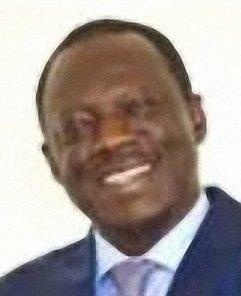 UN Special Rapporteur: Clément Nyaletsossi Voule. Photo: Bitter Winter
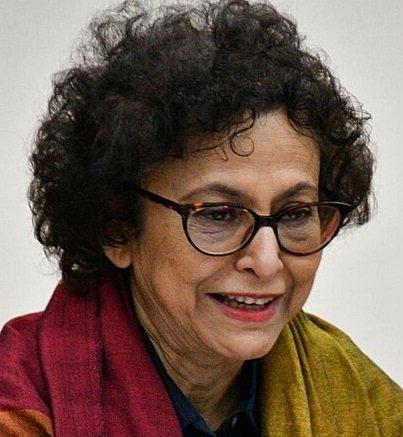 UN Special Rapporteur: Irene Khan. Photo (2024): Juan Carlo Ruff for the Philippine Information Agency / Wikimedia Commons. Public domain image. Cropped
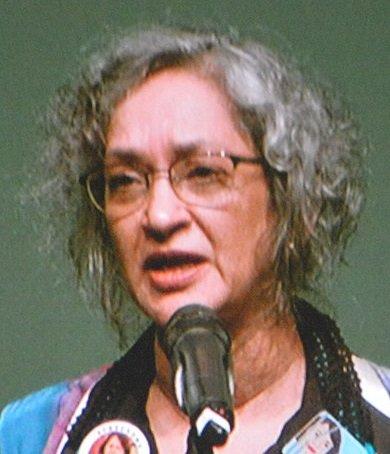 UN Special Rapporteur: Farida Shaheed. Photo (2016): Wotancito / Wikimedia Commons. License: CC ASA 4.0 Int. Cropped
 Nazila Ghanea, UN Rapporteur on Religious Freedom since February 2023. Photo: Steinar Murud
Duval draws attention to concerns expressed by four UN experts – Special Rapporteurs [See editor’s note below] – that the guidelines may affect both children’s freedom of religion and parents’ rights to provide religious and moral education consistent with their convictions. She also notes warnings that the policies could contribute to social stigma directed at members of minority religious communities. The French attorney writes,
“As stated by the four United Nations experts, the Guidelines ‘appear to set a lower threshold for the establishment of abuse in religious as opposed to non-religious contexts.’ For instance, the Guidelines ‘assert that “forcing a child to participate in religious activities, etc., during hours that may interfere with the child’s schooling or daily life constitutes neglect,” without clarifying what is meant by “forcing”, nor what distinguishes “religious activities, etc.” in this case from activities such as extra tutorials, music or language lessons, or other secular extra-curricular activities in “daily life”.’
The UN Special Rapporteurs concluded that ‘the Guidelines in their current form may undermine the rights of children to freedom of thought, conscience and religion (Convention on the Rights of the Child, Art. 14.1); and of parents to ensure the religious and moral education of their children in conformity with their own convictions, as set out in article 18, paragraph 4 of the ICCPR.’ They added that they ‘are also concerned that in the context of heightened suspicion of religious or belief minorities, the Guidelines in their current form may facilitate stigma, social pressure, or bullying of children belonging to religion or belief communities.’
They called on the Japanese government to review and reconsider certain key aspects of the Guidelines to ensure compliance with Japan’s international human rights obligations.”
The article argues that these concerns are particularly important in a social climate where public suspicion toward the Family Federation has increased significantly. Under such circumstances, Duval suggests, official policies may unintentionally reinforce discrimination or encourage negative stereotypes about children belonging to religious minorities.
 The headline of the press release issued by the Office of the United Nations High Commissioner for Human Rights (OHCHR) on 1st October 2025.
Although international experts reportedly called for aspects of the guidelines to be reconsidered, Duval notes that Japanese authorities proceeded with implementation and expanded training efforts directed at educators, counselors, and social workers.
Identifying Children from Religious Families
The final section of the article focuses on what Duval sees as one of the most troubling features of the overall policy framework: the active identification of children from targeted religious backgrounds.
She explains that teachers, counselors, and other school personnel are encouraged to recognize signs indicating that a student may come from a family influenced by specific religious beliefs. Importantly, this process may occur even when the child has not complained about family circumstances or requested assistance.
According to Duval’s analysis, school personnel are instructed to pay attention to requests for religious accommodations, behavioral differences linked to faith, or comments concerning religious practices at home. Such indicators may then trigger further observation or intervention.
 Family Federation families targeted by extreme Japanese laws to “protect children from their parents’ faith”. Illustration: Microsoft Designer Image Creator, 23rd October 2024.
The article argues that this approach effectively transforms educators into monitors of religious affiliation. Rather than responding to concrete evidence of abuse, Duval contends, authorities encourage schools to identify religious households first and investigate potential problems afterward.
To facilitate this process, guidance materials and counseling manuals have reportedly been distributed to relevant personnel. Duval views these resources as part of a broader strategy aimed at locating and influencing children from Family Federation families.
Conclusion
Patricia Duval’s third article presents a forceful critique of Japan’s post-dissolution policies toward the Family Federation. She argues that governmental initiatives framed as child-protection and educational programs constitute a broader campaign to reshape the beliefs of children raised within the movement. By examining educational materials, counseling systems, child-protection mechanisms, official guidelines, and school-based identification procedures, she portrays what she sees as an unprecedented effort to intervene in the religious transmission that traditionally occurs within families.
Whether one accepts or disputes her conclusions, the article raises important questions concerning the balance between child protection, parental rights, religious liberty, and state authority. It also situates the Japanese debate within a broader international discussion about how democratic societies should respond when concerns about controversial religious movements intersect with fundamental human rights protections.
Continued from Japan’s Next Step: Indoctrination of Children
See also When Raising Children in Faith Turns Suspicious
See also Dissolution Case: Pseudoscience Shaping Verdict
See also: Verdict Under the Shadow of “Mind Control” Myth
See also Brussels Press Conference Condemns Dissolution
See also Brainwashing Theory Returns Under New Names
See also Corporation Dissolved – Organization Remains
See also: The Contradictions of the Dissolution Order
Text: Knut Holdhus, editor
Featured image above: Patricia Duval – Member of the Paris Bar Association, specializing in international human rights law. Has defended the rights of religious and faith minorities both in France and internationally. Photo (2025): Naoko Tsujimoto (辻本奈緒子)
[Editor’s note: A Special Rapporteur (or Independent Expert) is an independent human rights expert appointed by the United Nations (UN) to provide reports or advice on human rights issues from either a thematic or country-specific perspective. These experts are selected by the UN Human Rights Council and operate independently of any government, playing a crucial role in monitoring the actions of sovereign nations and democratically elected governments.
Special Rapporteurs do not receive financial compensation from the United Nations for their work. However, they receive support from the Office of the United Nations High Commissioner for Human Rights and are often funded by charities and corporations. Annually, they convene in Geneva to discuss common issues, coordinate their efforts, and engage with various stakeholders, including states and civil society organizations.
These experts frequently conduct fact-finding missions to investigate human rights violation allegations in different countries. In addition to these missions, they regularly review complaints from alleged victims of human rights abuses. If a complaint is verified, they send an urgent letter or appeal to the concerned government. Even without a specific complaint, Special Rapporteurs can intervene on behalf of individuals or groups at their discretion.]
Related to treatment of faith minority families: Lawfare: State Uses Legal System in War on Faith
More, related to treatment of faith minority families: Scholar Questions Secrecy in Dissolution Case
And more, related to treatment of faith minority families: Shocked Author: “Japan Ignores Basics of Justice”
Still more, related to treatment of faith minority families: Legal Inconsistencies A Blow to Democracy
Even more, related to treatment of faith minority families: Japan: Court Accused of Using Speculation
Also related to treatment of faith minority families: MEXT’s Legal Spin and “Dissolution at All Costs”
Also related to treatment of faith minority families: UN Report: Japan’s Lawfare Against Faith Minority
And also related to treatment of faith minority families: Protesting No Transparency in Closed-Door Trial
More, related to treatment of faith minority families: Dangerous Flaws in Dissolution Order Decried
Also related to treatment of faith minority families: “Lawyers Lying and Shaming Japan” for 50 Years
And also related to treatment of faith minority families: Japan Following the Way of China
And also related to treatment of faith minority families: Japan’s Dissolution Case Echoes China’s Playbook
More, related to treatment of faith minority families: Media/Legal Expert: Communism Behind Persecution
And more, related to treatment of faith minority families: Militant Lawyers Dictate Government Policy
More, related to treatment of faith minority families: Collusion to Rob Minority of Its Rights
And more, related to treatment of faith minority families: State and Media Creating “Today’s Non-Citizens”
Still more, related to treatment of faith minority families: Japan Copying China: State Seizure of Churches
And still more, related to treatment of faith minority families: 12 Religious Freedom NGOs Denouncing Japan
More, related to treatment of faith minority families: 4300 Abductions and Forcible Detentions
And more, related to treatment of faith minority families: Japan: Families Fear for Graves of Loved Ones
Yet more, related to treatment of faith minority families: Lawyers Manipulating, Coercing, Lying
Also related to treatment of faith minority families: Kishida Follows Anti-Family Federation Minister
Also related to treatment of faith minority families: Militant Lawyers Dictate Government Policy
Still more, related to treatment of faith minority families: Malicious One-Sided Government Source Selection
And still more, related to treatment of faith minority families: Japan Urged to Make U-Turn
And yet more, related to treatment of faith minority families: Dangerous Precedent to Crush Religions
Even more, related to treatment of faith minority families: Japan Following the Way of China
Yet more, related to treatment of faith minority families: Japanese Communists’ Final War
Still more, related to treatment of faith minority families: Political and Social Activism behind Oppression
Still more, related to treatment of faith minority families: Dissolution Case: Rule of Law on Trial 4th March


