

The three stages of religious persecution: Introvigne brings warning to a South Korea at a dangerous crossroads for religious liberty
 From the head table of speakers holding copies of a joint declaration at the press conference held at the Seoul Foreign Correspondents’ Club on 7th August 2026, from left to right: Thierry Valle, president of CAP Liberté de Conscience, Márk Nemes, deputy director of CESNUR, Hans Noot, associate director of HRWF, Michael Langhans, executive director of FOREF Germany, Massimo Introvigne, managing director of CESNUR and editor-in-chief of Bitter Winter. Photo: Screenshot from live transmission by HRWF, improved resolution by ChatGPT, 8th Aug. 2026.
A speech by Dr. Massimo Introvigne, managing director of CESNUR and editor-in-chief of Bitter Winter, at a press conference held at the Seoul Foreign Correspondents’ Club on 7th August 2026. The event was organized by Human Rights Without Frontiers (HRWF) together with CAP Liberté de Conscience (CAP LC), FOREF, the Center for Studies on New Religions (CESNUR) and Bitter Winter.
See also How Reliable Is the Prosecution’s Key Witness?
See also Yoon’s Changing Accounts Challenged by Defense
See also: Defense Mounts Broad Challenge to State’s Case
See also Yoon’s Independence Put at Center of Case
See also New Case: Claims of Political Mobilization
See also 2026 Mass Enrollment Case: Evidence Under Fire
I’m a sociologist of religion and I have also served in institutional capacity, including as a representative of the Organization for Security and Cooperation in Europe (OSCE) for combating racism, xenophobia and religious intolerance.
When I was there, I co-authored at a conference in Rome what is called the Rome Model and is now widely quoted, a tool that predict that minorities, particularly religious minorities, are normally attacked through three stages: 1) intolerance – primarily by the media – 2) discrimination by courts of law, administrative authorities, and government, and then 3) persecution and violence.
This model applies to to both totalitarian and democratic states.
In fact, I’m not here to single out Korea.
This year I was called by the same OSCE to be a keynote speaker at a regional summit in Rome about intolerance and persecution of religious minorities in Western Europe.
There are only democratic countries in Western Europe, yet there are hate crimes.
And I discussed in particular the situation of the Jehovah’s Witnesses, applying the Rome model and showing how intolerance led to serious hate crimes, including hundreds of instances in Europe of violence, in some cases of attempted homicide.
Coming to Korea, we see, as in many other countries, the three stages at work.
The first stage is intolerance, which is the prevailing depiction in the media of some religious minorities as “heretics”, “cults”, “false prophets”, etc.
 Intensely persecuted in South Korea: The Jehovah’s Witnesses. Here, their logo and official website.
 Intensely persecuted, even by government representatives: Shincheonji Church of Jesus. Here, its logo.
 Intensely persecuted, even by government representatives: Family Federation for World Peace and Unification. Here its logo
And this is targeting in particular the Unification Church – now called the Family Federation – Shincheonji [See editor’s note 1 below], Jehovah’s Witnesses and others, relying largely on accounts by other religionists who are in competition with these groups, and apostate tax members.
The word “apostate” is not an insult. It is a sociological category designating the small minority of ex-members who spend their life attacking the groups they have left. Most ex-members are not apostates.
From intolerance, the step is short to discrimination by courts of law and administrative authorities.
And we are concerned to see in the Korean Parliament a draconian draft law allowing swift dissolution of religious organizations being discussed, one of the strictest in the world.
 Lee Man-hee (이만희 – 95), founder and chairman of Shincheonji (New Heaven and Earth). Photo: MBC PD수첩 / Wikimedia Commons. License: CC Attr 3.0 Unp
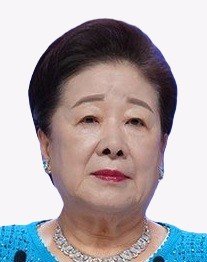 Hak Ja Han (한학자 – 83), aka Mother Han, Co-Founder of the Family Federation for World Peace and Unification. Photo: FFWPU
 Pastor Son Hyun-bo (손현보) of Segyero Church in Busan, here August 2025. Photo: Bitter Winter
And we are also concerned by the selective and particularly harsh application of existing laws, particularly the Election Law (Public Official Election Act) to detain religious leaders, including the now liberated Pastor Son Hyun-bo (손현보), Mother Han (한학자) of the Family Federation and Chairman Lee (이만희) of Shincheonji [See editor’s note 1 below].
The last two cases are very surprising for me coming from European Union because Mother Han is 83, Chairman Lee is 95.
In the European Union we have laws mandating that such elder defendants, if they are not responsible of violent crimes or blood crimes [See editor’s note 2 below], should await trial under house arrest and not in jail.
There is a danger that intolerance and discrimination will lead to actual violence.
And we have seen the violence in Korea while in the course of forced de-conversion we have a case of people severely beaten and even killed, as you all know.
And that just proves how easily the slippery slope of intolerance and discrimination may lead to persecution.
So religious intolerance should be stopped when it starts. It’s not a problem unique to Korea. We have the same problem in the European Union. There is a similar problem in the United States.
But there are some specially alarming cases in Korea. And the media may play a role in in alleviating the suffering of members of religious minorities. If there are specific common crimes, they should be investigated and punished.
But the blanket discrimination and intolerance against minorities is something that put in danger the very values on which our democratic social societies, including Korea.
Thank you.
See also How Reliable Is the Prosecution’s Key Witness?
See also Yoon’s Changing Accounts Challenged by Defense
See also: Defense Mounts Broad Challenge to State’s Case
See also Yoon’s Independence Put at Center of Case
See also New Case: Claims of Political Mobilization
See also 2026 Mass Enrollment Case: Evidence Under Fire
Featured image above: Dr. Massimo Introvigne, managing director of CESNUR and editor-in-chief of Bitter Winter, at the Seoul press conference on 7th August 2026. Screenshot from live transmission by HRWF, resolution improved by ChatGPT, 7th Aug. 2026.
[Editor’s note 1: Shincheonji, officially known as Shincheonji Church of Jesus, the Temple of the Tabernacle of the Testimony, is a new religious movement founded in South Korea in 1984 by Lee Man-hee, who claims to be the promised pastor mentioned in the Bible’s Book of Revelation.
Shincheonji teaches that the Book of Revelation is being fulfilled through its church and that Lee Man-hee has received divine revelation to interpret it. He teaches that South Korea is the location where the prophecies of the Book of Revelation are actively playing out in real-time, making it the epicenter of the final harvest. Shincheonji focuses on filling the literal 144,000 slots of the 12 Tribes mentioned in Revelation. Once this number of truly sealed, flawless believers is completed, they believe they will rule as kings and priests over the rest of humanity.]
[Editor’s note 2: “Blood crimes” is a direct translation of a term used in continental European legal systems like Italy’s delitti di sangue, referring to homicides or crimes involving severe physical bloodshed.]
Related to dangerous crossroads for religious liberty: Mother Han: The Dangers of Guilt by Position
Related to dangerous crossroads for religious liberty: Mother Han: Beyond One Trial – the Wider Stakes
Related to dangerous crossroads for religious liberty: At Issue: Religions Taking Reality Seriously
Also related to dangerous crossroads for religious liberty: Religion Between Engagement and Withdrawal
Also related to dangerous crossroads for religious liberty: State Failure and Non-State Peace Projects
And also related to dangerous crossroads for religious liberty: SKorean Court’s Sharp Criticism of Prosecutors
More, related to dangerous crossroads for religious liberty: Detention: Harsh Cell Conditions Spark Outcry
And more, related to dangerous crossroads for religious liberty: Official Statement on Recent Media Coverage
Also related to dangerous crossroads for religious liberty: Defense Challenges Core Claims of Indictment
And also related to dangerous crossroads for religious liberty: Unificationism Emerging as a World Religion
More, related to dangerous crossroads for religious liberty: Decline of Family Values Creates Social Crisis
And more, related to dangerous crossroads for religious liberty: Unificationism, Industry, and Cold War Survival
And more, related to dangerous crossroads for religious liberty: Movement Promoting Family as National Solution
Yet more, related to dangerous crossroads for religious liberty: “Church Closure” Risks in South Korea’s New Bill
Still more, related to dangerous crossroads for religious liberty: Mother Han Nominated for Nobel Peace Prize 2026
Also related to dangerous crossroads for religious liberty: Democratic Party’s Assault on Family Federation
And even more, related to dangerous crossroads for religious liberty: Mother Han (82) in Poor Health in Damp, Cold Cell
And still more, related to dangerous crossroads for religious liberty: Korean Crisis: “True Democracy Must Serve Heaven”
And yet more, related to dangerous crossroads for religious liberty: Faith Leaders Protest State Assault on Religion
And more, related to dangerous crossroads for religious liberty: Trump Raises Alarm Over Church Raids in Korea
Even more, related to dangerous crossroads for religious liberty: Mike Pompeo Calls Probe of Co-Founder “Lawfare”
Still more, related to dangerous crossroads for religious liberty: Korean Faith Crackdown: USA Urged to Confront It
Yet more, related to dangerous crossroads for religious liberty: Korean Bribery Scandal: Media Clears Federation
Related to dangerous crossroads for religious liberty: Lawfare: State Uses Legal System in War on Faith
More, related to dangerous crossroads for religious liberty: Scholar Questions Secrecy in Dissolution Case
And more, related to dangerous crossroads for religious liberty: Shocked Author: “Japan Ignores Basics of Justice”
Still more, related to dangerous crossroads for religious liberty: Legal Inconsistencies A Blow to Democracy
Even more, related to dangerous crossroads for religious liberty: Japan: Court Accused of Using Speculation
Also related to dangerous crossroads for religious liberty: MEXT’s Legal Spin and “Dissolution at All Costs”
Also related to dangerous crossroads for religious liberty: UN Report: Japan’s Lawfare Against Faith Minority
And also related to dangerous crossroads for religious liberty: Protesting No Transparency in Closed-Door Trial


