Survey finds 84.7% of Family Federation members report distress following Japan’s 2026 dissolution order as social exclusion deepens
 Logo of the Sekai Nippo
Tokyo, 22nd October 2026 – Published as an article in the Japanese newspaper Sekai Nippo. Republished with permission. Translated from Japanese. Original article.
Unable to Find a Place Where They Belong, Believers Continue to Suffer
Family Federation President Reports on Victims at CESNUR 2026 International Symposium
by the Religious Freedom Investigative Team of the editorial department of Sekai Nippo
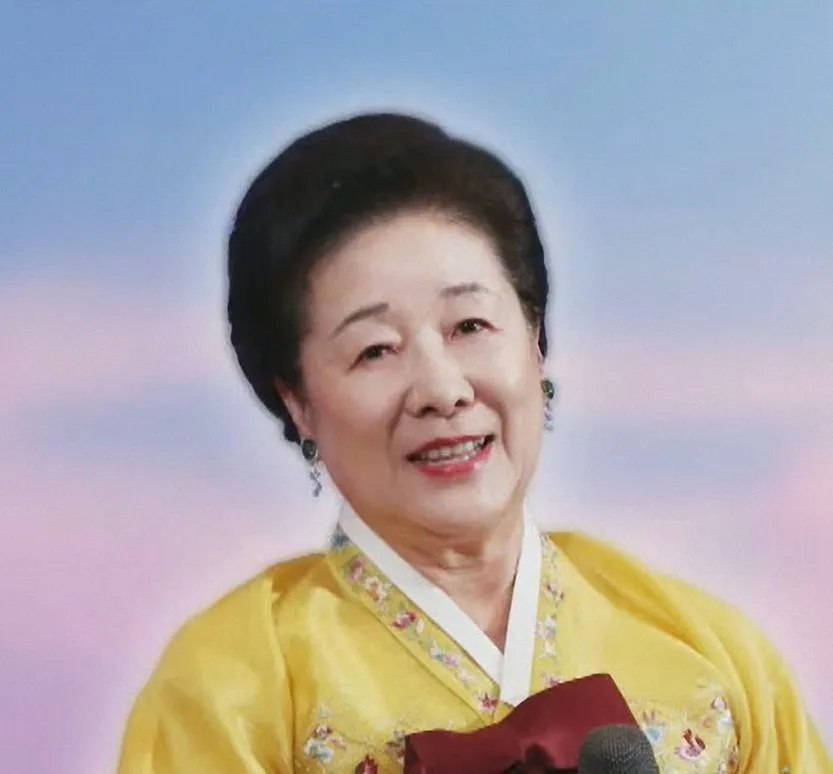
 Masaichi Hori, here in Gapyeong, South Korea 24th Aug. 2025. Photo: FFWPU
At CESNUR 2026, an international symposium on minority religion studies held in Taichung, central Taiwan. Masaichi Hori (堀正一), the president of the Family Federation for World Peace and Unification (FFWPU, formerly the Unification Church), reported on 12th October on the serious situation facing members following the order to dissolve the religious corporation.
See also The Fallout from Japan’s 2026 Dissolution Order
Suffering from a Profound Sense of Loss
On 4th March, the Family Federation entered liquidation proceedings following the Tokyo High Court‘s decision upholding the order to dissolve the religious corporation. While ordering the corporation’s dissolution, the court also stated that “there is no justification for believers to be subjected to social discrimination, social exclusion, or persecution.”
Numerous Cases of Family Violence and Discrimination
 Graph showing the results of a new survey on the impact of the dissolution order against the Family Federation for World Peace and Unification in Japan on its members (as of 5th October 2026). Illustration: FFWPU, English version by ChatGPT, October 2026.
According to the Family Federation, however, many members are experiencing psychological distress in practice. Drawing on the results of a survey conducted among members, Hori reported cases involving medical treatment for physical and mental health problems, violence by family members, discriminatory treatment at schools and workplaces, and even cases of suicide.
The survey was conducted from 15th July to 5th October and received a total of 13,213 responses. Regarding psychological distress, 1,763 respondents said they were experiencing it “very severely,” 2,992 said “severely,” 4,165 said “to some extent,” and 2,276 said “a little.” The combined total was 11,196 responses, meaning that 84.7% of respondents reported experiencing some degree of psychological distress.
In addition, 3,724 respondents reported adverse effects on their physical health. Of these, 541 had sought treatment at a hospital, while 352 had visited a psychosomatic medicine clinic.
Hori further explained that the survey had documented more than 2,000 instances of critical remarks or violence by family members and relatives; 462 cases in which members felt uncomfortable after the Family Federation was brought up at school or work; 19 cases in which teachers or counselors questioned individuals about their religious beliefs; and 44 cases of business-related disadvantages. These findings illustrate how members are being affected in various areas of their daily lives.
Commenting on the results, clinical psychologist Kenichi Endo (遠藤健市) observed:
“Quite a few people are suffering from a profound sense of loss, feeling as though they have lost something that served as the foundation of their lives. The impact is likely to be particularly severe for believers who found a place where they belonged in the church and had been actively involved.”
The findings suggest that the dissolution decision and the accompanying liquidation measures are having a significant impact on the personal foundations of individual believers, including their values and outlook on life.
Endo added that “when people feel that the faith and activities to which they have devoted themselves seriously for many years have been rejected by the state and society, it can become extremely difficult for them to come to terms with the situation psychologically.”
 Changed the interpretation overnight of the Religious Corporations Act: Former Japanese prime minister Fumio Kishida, here on 14th July 2022. Photo: 首相官邸 / Wikimedia Commons. License: CC Attr 4.0 Int. Cropped
The process surrounding the Family Federation‘s dissolution extended over a prolonged period. It began with critical media coverage following the assassination of former Prime Minister Shinzo Abe (安倍晋三), followed by statements in the Diet by then-Prime Minister Fumio Kishida (岸田文雄) that involved a change in the interpretation of the Religious Corporations Act, the Ministry of Education, Culture, Sports, Science and Technology‘s exercise of its right to question [See editor’s note below] the religious organization, and ultimately the court’s decision.
Did the Judicial Decision Underestimate Human Rights Violations?
Criticized by a Doctor
The survey results suggest, however, that the psychological distress experienced by believers during this process has not received sufficient consideration.
Some of the cases Hori presented raise serious human rights concerns. In one reported case, a member who sought treatment at a psychosomatic medicine clinic was confronted by a doctor who criticized the religious organization and pressed the patient with the question,
“Do you still believe in it?”
In another case, a university student receiving counseling was treated as though the student’s religious faith itself were the cause of their psychological difficulties.
Hori also described a case in which a believer sustained injuries after being subjected to violence by family members. Another case involved an employee of the Family Federation, identified as N., who was dismissed as a result of the liquidation proceedings and forced to leave staff accommodation. The resulting difficulties with utility contracts and payments, including water and gas, contributed to a deterioration in the employee’s living conditions.
 Constitutionally highly problematic proceedings against Family Federation were held behind closed doors in the joint building of the Tokyo High Court, Tokyo District Court, and Tokyo Summary Court in Chiyoda Ward, Tokyo, Japan. Photo: 663highland / Wikimedia Commons. License: CC ASA 3.0 Unp
The High Court’s decision stated,
“Even if a religious corporation loses its legal personality, it may continue its activities as a religious organization without legal personality, provided that the organization itself continues to exist.” The court also noted that “employment relationships with staff may continue.”
However, with all facilities and assets subject to liquidation, turning that stated possibility into reality is far from straightforward.
The decision also explicitly stated,
“It goes without saying that social discrimination, social exclusion, and persecution against believers are impermissible, whatever the reason may be.”
In reality, however, numerous cases have arisen in which individual believers have found themselves at the receiving end of criticism and prejudice following the dissolution of their religious corporation. This is an issue that cannot be overlooked.
Hori also referred to a female believer in her 60s who took her own life in May,
“According to the reports we received, this woman had been experiencing psychological difficulties since the beginning of the year, and her symptoms worsened after the 4th March decision.”
He concluded by emphasizing the significance of losing a source of daily support:
“What I want to convey here is the need to ask just how profound an impact losing a place and relationships that have provided daily support can have on someone who is struggling psychologically.”
Hori called for greater understanding of the effects that the dissolution of the religious corporation can have on the lives and mental well-being of individual believers.
See also The Fallout from Japan’s 2026 Dissolution Order
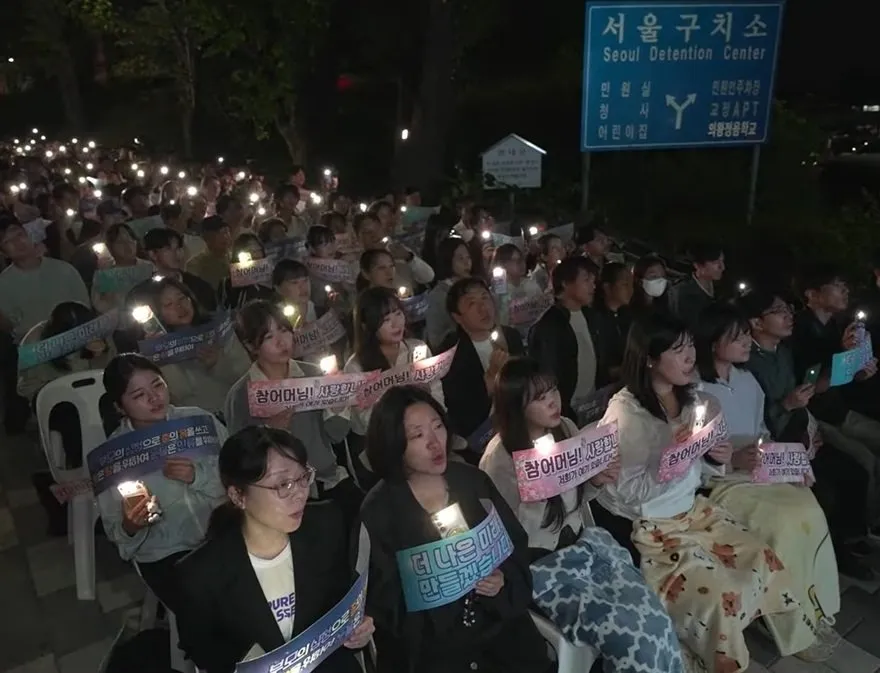
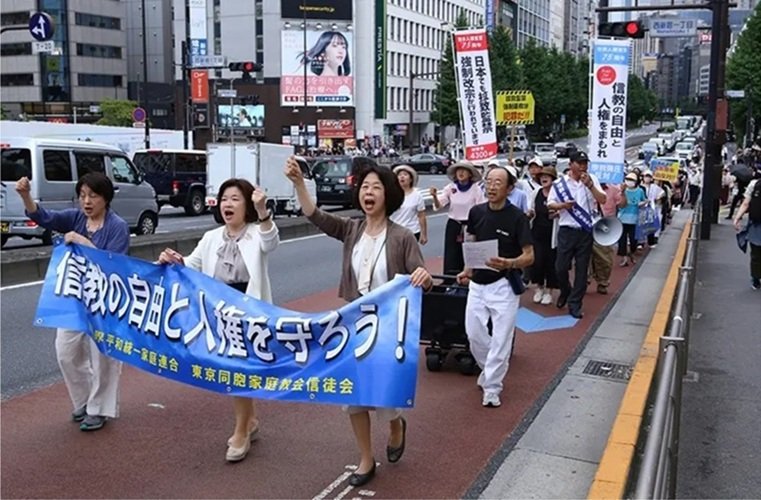
Featured image above: Members of the Family Federation demonstrating for religious freedom and human rights in Shinjuku, Tokyo on 30th June 2024. Photo: Reiwa Kato (加 藤 玲 和)
[Editor’s note: The right to question: In Japan’s dissolution case against the Family Federation for World Peace and Unification (formerly the Unification Church), the Ministry of Education, Culture, Sports, Science and Technology (MEXT) used what is known as the “right to question” under Article 78-2 of Japan’s Religious Corporations Act. It was an administrative investigative procedure intended to establish whether there were sufficient grounds to seek a court-ordered dissolution.
The “right to question” was the investigative stage preceding the government’s application for dissolution, not the dissolution decision itself. Its stated purpose was to establish whether the Family Federation’s activities met the statutory criteria for dissolution. Its broader significance lies in how the state exercises investigative powers over religious organizations while balancing enforcement of the law against freedom of religion and the safeguards required by the Religious Corporations Act.
The right to question gives the competent government authority the power to require a religious corporation to submit reports and documents and to put questions to it concerning its activities when there are legally specified grounds for investigation.
The government argued that it needed to establish the facts systematically before deciding whether to ask a court to dissolve the organization. The investigation was intended to gather evidence about the nature, extent and continuity of alleged unlawful activities, rather than rely solely on media reports, public complaints or allegations by individual parties.
MEXT subsequently exercised the right to question the Family Federation seven times, seeking reports and documents. The government also interviewed more than 170 alleged victims, according to MEXT’s March 2026 account of the process.
The case raised questions about the boundary between legitimate government oversight and interference with religious organizations. Although the law expressly protects freedom of religion, critics of the investigation argued that the scope and repeated use of the questioning procedure placed excessive pressure on the organization.]
Related to survey finding widespread distress: Lawfare: State Uses Legal System in War on Faith
More, related to survey finding widespread distress: Scholar Questions Secrecy in Dissolution Case
And more, related to survey finding widespread distress: Shocked Author: “Japan Ignores Basics of Justice”
Still more, related to survey finding widespread distress: Legal Inconsistencies A Blow to Democracy
Even more, related to survey finding widespread distress: Court Accused of Using Speculation
Also related to survey finding widespread distress: MEXT’s Legal Spin and “Dissolution at All Costs”
Also related to survey finding widespread distress: UN Report: Japan’s Lawfare Against Faith Minority
And also related to survey finding widespread distress: Protesting No Transparency in Closed-Door Trial
More, related to survey finding widespread distress: Dangerous Flaws in Dissolution Order Decried
Also related to survey finding widespread distress: “Lawyers Lying and Shaming Japan” for 50 Years
And also related to survey finding widespread distress: Japan Following the Way of China
And also related to survey finding widespread distress: Japan’s Dissolution Case Echoes China’s Playbook
More, related to survey finding widespread distress: Media/Legal Expert: Communism Behind Persecution
And more, related to survey finding widespread distress: Militant Lawyers Dictate Government Policy
More, related to survey finding widespread distress: Collusion to Rob Minority of Its Rights
And more, related to survey finding widespread distress: State and Media Creating “Today’s Non-Citizens”
Still more, related to survey finding widespread distress: Japan Copying China: State Seizure of Churches
And still more, related to survey finding widespread distress: 12 Religious Freedom NGOs Denouncing Japan
More, related to survey finding widespread distress: 4300 Abductions and Forcible Detentions
And more, related to survey finding widespread distress: Japan: Families Fear for Graves of Loved Ones
Yet more, related to survey finding widespread distress: Lawyers Manipulating, Coercing, Lying
Also related to survey finding widespread distress: Kishida Follows Anti-Family Federation Minister
Also related to survey finding widespread distress: Militant Lawyers Dictate Government Policy
Still more, related to survey finding widespread distress: Malicious One-Sided Government Source Selection
And still more, related to survey finding widespread distress: Japan Urged to Make U-Turn
And yet more, related to survey finding widespread distress: Dangerous Precedent to Crush Religions
Even more, related to survey finding widespread distress: Japan Following the Way of China
Yet more, related to survey finding widespread distress: Japanese Communists’ Final War
Still more, related to survey finding widespread distress: Political and Social Activism behind Oppression
Still more, related to survey finding widespread distress: Dissolution Case: Rule of Law on Trial 4th March