Media warns that risky precedent is set by Washington appeals court if self-dealing case is thrown out due to religious ties
See also UPI Bias: Does Legal History Shape Reporting?
 The Washington Times commented 11th February on a complex legal battle over control of $3 billion in assets belonging to the Unification Church.
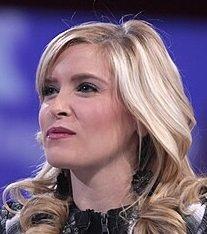 Alex Swoyer. Photo (2016): Gage Skidmore / Wikimedia Commons. License: CC ASA 2.0 Gen. Cropped
In an article titled “Unification Church dispute over funds gets day in court in D.C.”, legal affairs reporter Alex Swoyer and staff writer Stephen Dinan report that the case has reached a Washington, D.C. appeals court. And it raises questions about whether judicial intervention in the matter would violate the First Amendment.
Judges weigh constitutional limits on church dispute
 Logo of Baptist News Global
The piece by Swoyer and Dinan goes a long way to confirm what Mark Wingfield wrote for the Baptist News Global 11th February. He emphasized that the long-standing legal principle of “ecclesial abstention” generally prevents courts from intervening in matters concerning church governance due to the First Amendment’s protection of religious freedom. Wingfield warned of the danger that this principle allows bad actors to get away in cases involving large-scale fraud and gross financial misconduct.
The Washington Times article describes the very same problem, how a panel of three judges expressed reluctance to involve the courts in the dispute, as it appears deeply intertwined with religious doctrine and church governance – areas traditionally outside the judiciary’s purview.
At the heart of the case is a disagreement between two factions:
- the Family Federation for World Peace and Unification International, which asserts it is upholding the legacy and wishes of the late Rev. Sun Myung Moon (1920-2012), the Unification Church’s founder.
- Preston Moon, Rev. Moon’s eldest living son. Preston Moon was once considered a likely successor to his father but later faced challenges to that role.
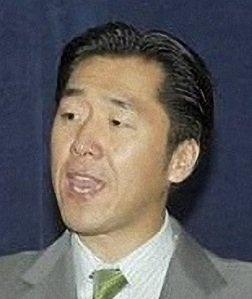 Hyun Jin Preston Moon speaking in 2007. Photo: FFWPU
The Family Federation accuses Preston Moon and the UCI, previously called Unification Church International, of diverting assets, now valued at approximately $3 billion, that were meant to support the church’s mission. Instead, they claim, the funds were redirected toward Preston Moon’s personal projects.
Legal arguments and judicial skepticism
Representing the Family Federation, attorney Cathy Hinger argued that if the lower courts allowed her clients to proceed with their case, they could demonstrate that Preston Moon acted in bad faith, engaging in self-dealing that unlawfully diverted church funds.
Hinger told the judges that the transfers essentially became a way to launder the D.C. nonprofit assets, stripping them of the protections and oversight required by local nonprofit laws.
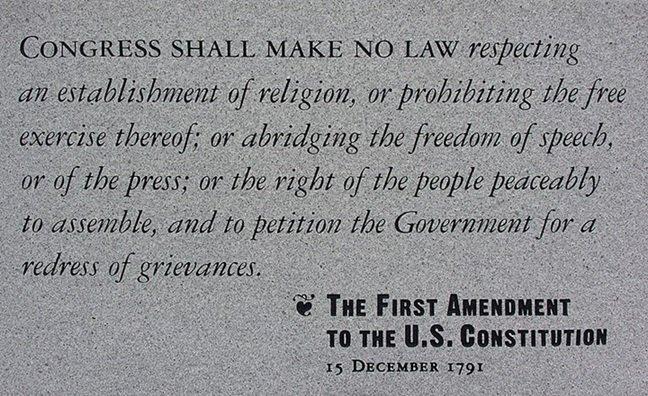 From “The First Amendment to The U.S. Constitution” Monument in Independence National Historic Park in Philadelphia, Pennsylvania. Photo: Ed Uthman / Wikimedia Commons. License: CC ASA 2.0 Gen
However, Jacob Roth, the attorney representing Preston Moon, countered that his client was acting in accordance with the church’s mission and that the First Amendment prohibits courts from interfering in religious matters.
 Joshua Deahl. Photo (2022): United States Senate Committee on Homeland Security and Governmental Affairs / Wikimedia Commons. Public domain image
Judge Joshua Deahl appeared to find merit in Roth’s argument, questioning whether determining “bad faith” would require the court to assess whether the assets were used in alignment with Unification Church principles – a religious judgment that the judiciary is not equipped to make.
The judge noted that there would have been no disagreement whether the disputed financial moves furthered the church’s mission if Rev. Moon himself had made them. That suggests, according to Deahl, that the real issue here is not the decisions themselves but who made them – a question he for some reason claims is rooted in church doctrine.
Judge Deahl also pointed out that Rev. Moon frequently used church funds for projects that Deahl maintains were personal in nature, such as establishing The Washington Times in 1982. He added that boosting one’s profile seems to go hand in hand with elevating the church’s profile.
In response, Hinger, speaking for the religious organization, maintained that Preston Moon’s actions exceeded what could be considered legitimate church-related spending, arguing that he had engaged in outright self-dealing. She asserted that the Family Federation had evidence to prove this in court.
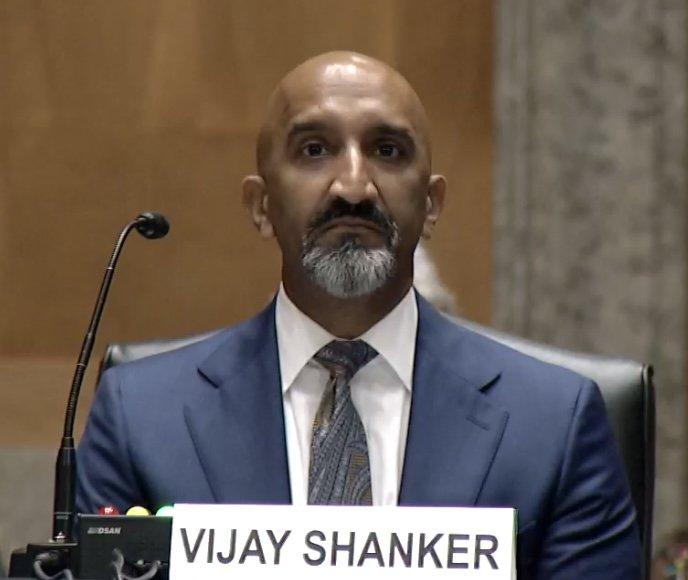 Vijay Shanker. Photo (2022): United States Senate Committee on Homeland Security and Governmental Affairs / Wikimedia Commons. Public domain image
Judge Vijay Shanker, however, was unconvinced, questioning whether the claims were sufficiently supported by legal filings. He asked where exactly the self-dealing could be found. Shanker claimed that this isn’t just a trial issue; it’s a matter of properly pleading and demonstrating grounds for summary judgment.
A longstanding legal battle
The Washington daily describes how this case has been making its way through Washington, D.C.’s legal system since 2011 and has previously been before the appeals court. In 2022, the appellate judges ruled that the First Amendment largely shielded Preston Moon and UCI from legal claims but instructed the lower court to examine allegations of fraud more closely. Judge Deahl was part of that decision as well.
On Tuesday, UCI’s attorney Derek Shaffer argued that it was time to put an end to the litigation. He maintained that the case has drained the parties involved, even that it has placed an undue burden on a religious movement. He asserted that continuing the case was itself an act of bad faith.
Broader implications and concerns from advocacy groups
 Dismissing the case on church autonomy grounds could set a dangerous precedent. Here, selection from “Nameless”, painting by Luis Vargas Santa Cruz (Q112692608) about clergy abuse in Catholicism. Photo: Marafeminista / Wikimedia Commons. License: CC ASA 4.0. Cropped
As reported earlier – and now pointed out by The Washington Times – the legal battle has drawn attention from various advocacy organizations. A coalition of child welfare and anti-clergy abuse groups has sided with the Family Federation, warning that dismissing the case on church autonomy grounds could set a dangerous precedent.
In their legal brief, the coalition argued that shielding religious institutions from legal scrutiny has historically enabled misconduct to go unchecked.
The coalition led by Child USA stated,
“For too long, the failure to adjudicate claims where religion was superficially involved enabled institutional bad actors to seek shelter from the very laws that were designed to deter their harmful activities.”
The coalition claims that the Catholic Church’s clergy abuse scandals are a stark reminder of the societal cost when religious institutions operate beyond the reach of the law, potentially harming untold numbers and obstructing justice.
The Washington Times’ ownership and editorial independence
In their article, Swoyer and Dinan point out that The Washington Times was founded by Sun Myung Moon and Hak Ja Han and is owned by Operations Holdings Ltd., a business subsidiary of the Unification Church. Despite this ownership structure, the newspaper maintains independent editorial control, with professional journalists overseeing its content.
See also UPI Bias: Does Legal History Shape Reporting?
Text: Knut Holdhus
Featured image above: District of Columbia Court of Appeals. Photo (2024): Ajay Suresh / Wikimedia Commons. License: CC Attr 2.0 Gen
Related to risky precedent: “Concealing Fraud Behind Religious Smokescreen”
Also related to risky precedent: Legal Battle Continues to Regain Stolen Funds
Also related to risky precedent: Gross Rights Violation: State-Run Faith-Breaking
And also related to risky precedent: Terms from Consumer Law Used to Rob Faith
More, related to risky precedent: Courts Using Debunked Concepts Against Minority
Even more, related to risky precedent: Collusion to Rob Minority of Its Rights
Still more, related to risky precedent: State and Media Creating “Today’s Non-Citizens”
Yet more, related to risky precedent: Japan’s New Laws to Curb New Religious Movements
And even more, related to risky precedent: Japan: 4300 Abductions and Forcible Detentions
And still more, related to risky precedent: Lawyers Manipulating, Coercing, Lying
And yet more, related to risky precedent: Illegalities of Activist Lawyers Exposed
More, related to risky precedent: Dangerous Precedent to Crush Religions
And more, related to risky precedent: Fabricated Torts Part of Wily Strategy in Japan
Still more, related to risky precedent: Government’s Foul Play Pointed Out
Even more, related to risky precedent: 12 Religious Freedom NGOs Denouncing Japan
Yet more, related to risky precedent: Exhibition Exposes Dehumanization of Believers
And even more, related to risky precedent: “Worst Post-War Human Rights Violations in Japan”
And still more, related to risky precedent: FoRB: Believers Denied Most Basic Human Right