

UN submission raises concerns over Japan’s dissolution of the Family Federation, its rapid liquidation, and coordinated shutdown of 260 churches
 UN Special Rapporteur on Religious Freedom: Nazila Ghanea. Photo: GiovannaKa / Wikimedia Commons. License: CC ASA 4.0 Int
On 4th March 2026, French international human rights lawyer Patricia Duval submitted a statement to the NGO Committee on Freedom of Religion and Belief at the United Nations Office in Geneva. Her declaration was prepared ahead of a meeting with the United Nations Special Rapporteur on Freedom of Religion or Belief, Nazila Ghanea [See editor’s note below]. Duval’s statement was published in the leading online human rights magazine Bitter Winter on 6th March under the headline Japan: Hundreds of Thousands of Unification Church Believers Deprived of Places of Worship.
See also “Loss of Appeal Part of Systemic Persecution”
See also Social Ostracism for Believers After Legal Loss
See also “Politically Driven Dissolution at Any Cost”
See also If Civil Liability Is Enough, Is Any Faith Safe?
See also Constitution: Dissolution Requires Public Trial
See also Preparations Underway for Supreme Court Appeal
Concerns About Religious Freedom in Japan
The statement raises serious concerns about the impact of a court decision in Japan, on the same day, that ordered the dissolution of the religious organization commonly known as the Unification Church, formally called the Family Federation for World Peace and Unification. According to the submission, the way this decision was implemented has had immediate and far-reaching consequences for the ability of hundreds of thousands of believers to practice their religion.
 The situation is particularly significant because Japan is a party to the International Covenant on Civil and Political Rights (ICCPR), an international treaty that protects fundamental freedoms, including the right to freedom of religion under Article 18. This treaty limits when governments may restrict religious activity, allowing restrictions only under very narrow circumstances related to public safety, order, health, morals, or the rights of others.
The events that followed the court decision have raised questions among international observers about whether these international legal obligations have been respected.
Closure of Churches Across Japan
On the morning of 4th March, the Tokyo High Court announced its decision to uphold an order dissolving the Family Federation as a religious corporation. Immediately after the ruling, the appointed liquidator, Hisashi Ito (伊藤尚), contacted the Federation’s lead attorney, Nobuya Fukumoto (福本修也), to inform him that liquidation procedures would begin at once.
 Notification of closure, put up on 260 churches nationwide on 4th March 2026 by the Japanese authorities. Photo: FFWPU
Within about an hour of the announcement, teams of lawyers accompanied by police officers reportedly arrived simultaneously at churches across Japan. Their mission was to explain the legal process of liquidation, take control of the buildings, and secure the organization’s assets. Keys to the properties were confiscated, and the facilities were effectively closed.
This operation was carried out at approximately 260 church locations nationwide. At the organization’s headquarters in the Shibuya district of Tokyo, about twenty liquidators entered the building and shut it down. Staff members were reportedly told that they were no longer allowed to enter their workplace and were instructed to remain at home.
Members of the religious organization later stated that the scale and coordination of the operation suggested that preparations had been made well in advance. For example, a website dedicated to the liquidation process had already been created before the court issued its decision. The domain name for the site had been registered several weeks earlier, on 13th February, and several documents outlining liquidation procedures had already been uploaded.
According to one Family Federation member, the rapid deployment of approximately one thousand lawyers and police officers across the country gave the impression of a large-scale law-enforcement operation. The member noted that this occurred despite assurances from government officials and courts that the dissolution of the religious organization as a legal entity would not interfere with the personal religious practices of its followers.
In practice, however, the closure of all Federation buildings meant that many believers suddenly found themselves without any place to gather for worship or communal religious activity.
Legal Basis for the Dissolution
The dissolution order was originally issued by a district court and later upheld on appeal. The courts based their decision primarily on civil lawsuits that had been filed over several decades by former members seeking damages.
In those cases, civil courts had concluded that certain activities by the organization violated “social norms” or “social appropriateness”. These judgments were then used as grounds to justify dissolving the religious corporation.
Critics argue that this reasoning is problematic because the dissolution was not based on criminal convictions but on civil liability claims connected to past disputes.
Concerns Raised by United Nations Experts
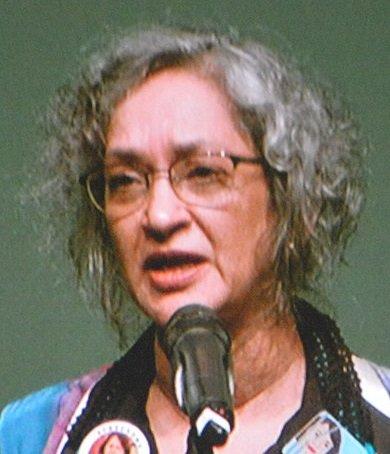 UN Special Rapporteur: Farida Shaheed. Photo (2016): Wotancito / Wikimedia Commons. License: CC ASA 4.0 Int. Cropped
 UN Special Rapporteur: Nina Romero. Photo: OHCHR / United Nations
 UN Special Rapporteur: Nicolas Levrat. Photo: OHCHR / United Nations UN Special Rapporteur on Religious Freedom: Nazila Ghanea. Photo: GiovannaKa / Wikimedia Commons. License: CC ASA 4.0 Int
Before the final decision was issued, four United Nations Special Rapporteurs [See editor’s note below] expressed concern about the possible dissolution of the religious organization. On 1st October 2025, they released a public statement warning that dissolving a religious organization based on the vague concept of “public welfare” would conflict with international human rights law.
In particular, they noted that Article 18(3) of the ICCPR allows restrictions on religious freedom only in very limited circumstances and requires governments to demonstrate that such restrictions are necessary and proportionate.
When the High Court eventually delivered its lengthy ruling, it addressed the concerns of the UN experts only briefly.
The court argued that dissolving a religious corporation simply removes its legal status as an organization and does not legally prevent individuals from continuing to practice their religion.
However, critics argue that the immediate closure of all church facilities suggests that the real-world consequences of the decision are much broader. Without access to buildings, resources, and organizational structures, believers may find it extremely difficult to practice their religion collectively.
The court also argued that actions considered civil wrongs under Japanese law – and deemed harmful to the public welfare – could be interpreted as falling within the categories of harm listed in Article 18(3), such as threats to public order or the rights of others.
A Broader Human Rights Debate
According to Patricia Duval’s statement, what she calls the Japanese authorities’ “tautological and highly fallacious reasoning” creates a circular argument: because the court determined that the organization harmed the public welfare, the dissolution is therefore considered justified under international human rights standards.
From the perspective presented in the statement, this approach risks undermining the strict safeguards that international law places on restrictions of religious freedom.
As a result, the case has become a subject of growing debate among legal experts and human rights advocates about the balance between protecting the public interest and safeguarding fundamental freedoms.
Patricia Duval ends her statement with clear words of warning,
“This decision constitutes a blatant violation of international law and shows profound contempt for international institutions and the human rights commitments that Japan pretended to join after World War II.”
See also “Loss of Appeal Part of Systemic Persecution”
See also Social Ostracism for Believers After Legal Loss
See also “Politically Driven Dissolution at Any Cost”
See also Final Legal Avenue: Special Appeal Filed
See also If Civil Liability Is Enough, Is Any Faith Safe?
See also Protesters Sound Alarm on Japan’s Faith Policy
See also Constitution: Dissolution Requires Public Trial
See also Preparations Underway for Supreme Court Appeal
See also No Assembly Rights as Liquidators Take Control
See also Political Party Challenges Dissolution Ruling
See also Closing an Organization Cannot End Faith
Text: Knut Holdhus, editor
Featured image above: French international human rights lawyer Patricia Duval in Tokyo 5th February 2025. She is a member of the Paris Bar Association, specializing in international human rights law. Earned a degree in public law from Sorbonne University. Has defended the rights of religious and faith minorities both in France and internationally, including at the European Court of Human Rights (ECtHR), the Council of Europe (CE), the Organization for Security and Co-operation in Europe (OSCE), the European Union (EU), and the United Nations. Author of numerous academic papers on religion and freedom of belief. Photo: Sekai Nippo
[Editor’s note: A Special Rapporteur (or Independent Expert) is an independent human rights expert appointed by the United Nations (UN) to provide reports or advice on human rights issues from either a thematic or country-specific perspective. These experts are selected by the UN Human Rights Council and operate independently of any government, playing a crucial role in monitoring the actions of sovereign nations and democratically elected governments.
Special Rapporteurs do not receive financial compensation from the United Nations for their work. However, they receive support from the Office of the United Nations High Commissioner for Human Rights and are often funded by charities and corporations. Annually, they convene in Geneva to discuss common issues, coordinate their efforts, and engage with various stakeholders, including states and civil society organizations.
These experts frequently conduct fact-finding missions to investigate human rights violation allegations in different countries. In addition to these missions, they regularly review complaints from alleged victims of human rights abuses. If a complaint is verified, they send an urgent letter or appeal to the concerned government. Even without a specific complaint, Special Rapporteurs can intervene on behalf of individuals or groups at their discretion.]
Related to UN submission: Lawfare: State Uses Legal System in War on Faith
Also related to UN submission: MEXT’s Legal Spin and “Dissolution at All Costs”
Also related to UN submission: UN Report: Japan’s Lawfare Against Faith Minority
And also related to UN submission: Protesting No Transparency in Closed-Door Trial
More, related to UN submission: Dangerous Flaws in Dissolution Order Decried
Also related to UN submission: “Lawyers Lying and Shaming Japan” for 50 Years
And also related to UN submission: Japan Following the Way of China
And also related to UN submission: Japan’s Dissolution Case Echoes China’s Playbook
More, related to UN submission: Media/Legal Expert: Communism Behind Persecution
And more, related to UN submission: Militant Lawyers Dictate Government Policy
More, related to UN submission: Collusion to Rob Minority of Its Rights
And more, related to UN submission: State and Media Creating “Today’s Non-Citizens”
Still more, related to UN submission: Japan Copying China: State Seizure of Churches
And still more, related to UN submission: 12 Religious Freedom NGOs Denouncing Japan
More, related to UN submission: 4300 Abductions and Forcible Detentions
And more, related to UN submission: Japan: Families Fear for Graves of Loved Ones
Yet more, related to UN submission: Lawyers Manipulating, Coercing, Lying
Also related to UN submission: Kishida Follows Anti-Family Federation Minister
Also related to UN submission: Militant Lawyers Dictate Government Policy
Still more, related to UN submission: Malicious One-Sided Government Source Selection
Yet more, related to UN submission: Kishida’s Self-Defeating Populist Decisions
And still more, related to UN submission: Japan Urged to Make U-Turn
And yet more, related to UN submission: Dangerous Precedent to Crush Religions
Even more, related to UN submission: Japan Following the Way of China
Yet more, related to UN submission: Japanese Communists’ Final War
Still more, related to UN submission: Political and Social Activism behind Oppression
Still more, related to UN submission: Dissolution Case: Rule of Law on Trial 4th March


