A month after special probe into religious lobbying allegations began, South Korean daily examines the progress made
 The logo of the Hankyoreh Shimbun
The liberal South Korean daily Hankyoreh published on 14th February an article headlined “Joint Investigation Headquarters One Month In. How Much Has Been Revealed About the Unification Church’s Bribery and Shincheonji’s Organized Party Enrollment?”
See also Media on Succession: Who Leads after Mother Han?
See also Return to Custody as Court Rejects Health Plea
See also More Humanity Even in A Communist Prison?
See also Religion, Politics, and Money at Center of Trial
See also Indictment Language Challenged by Defense
See also Global Clergy Visit Detained Mother Han
See also Alleged Attempt to Influence Witness Statements
The piece by reporter Kang Jae-gu (강재구) is all about South Korea’s political landscape in early 2026 being shaken by a fast-moving investigation into alleged ties between powerful religious organizations and mainstream political actors. At the center of the controversy are two groups long familiar to the Korean public: Unificationism (통일교) – often called the Unification Church – and Shincheonji (신천지) [See editor’s note below].
 Being investigated: the Shincheonji Church of Jesus. Here, its logo.
 Being investigated: the Family Federation for World Peace and Unification. Here its logo
Directed by the left-leaning Lee administration, prosecutors and police have formed a joint investigation task force to determine whether these organizations – generally perceived to be conservative – engaged in improper financial dealings, political lobbying, or coordinated efforts to influence party politics. Although the investigation is still ongoing, the allegations already suggest potentially far-reaching consequences for politicians across party lines.
According to the Hankyoreh, the joint investigation headquarters – launched on 6th January – was created specifically to examine suspicions of “religion-politics collusion”. In South Korea, where religious groups can wield substantial social influence, the idea that organized religious bodies may have attempted to sway elections or curry favor with political elites has become a highly sensitive issue. Since its formation, the task force has carried out search and seizure operations and summoned numerous individuals for questioning. Investigators are attempting to reconstruct events in detail: who met whom, what money changed hands, and whether any of these transactions violated criminal law.
The inquiry into what is now called the Family Federation for World Peace and Unification – referred to by its former name the Unification Church in the article – focuses primarily on alleged financial lobbying of politicians from both the ruling and opposition parties. In fact, suspicion of bribery was the original trigger for the creation of the joint investigation unit.
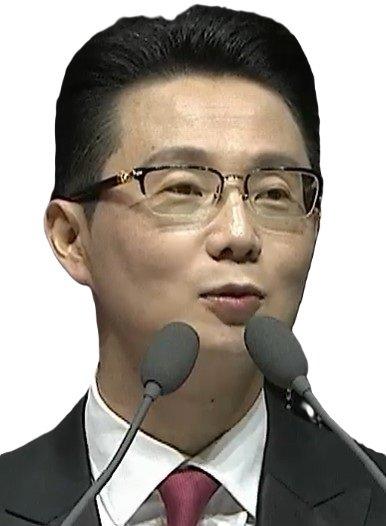 Yoon Yeong-ho, 5th Dec. 2021. Screenshot from live transmission from an international rally by FFWPU.
The controversy intensified after it became known that Yoon Yeong-ho (윤영호), a former senior official at the Family Federation’s world headquarters, reportedly told investigators that between 2018 and 2020 he delivered tens of millions of Korean won to several prominent political figures. These include Jeon Jae-soo (전재수), a lawmaker from the Democratic Party; Lim Jong-seong (임종성), a former Democratic Party legislator; and Kim Kyu-hwan (김규환), now head of the state-run Korea Coal Corporation and previously affiliated with the conservative United Future Party.
The South Korean paper writes that Yoon is also separately accused of giving luxury items – such as an expensive necklace and handbag – to former First Lady Kim Keon-hee (김건희), which further heightened public scrutiny.
According to the allegations, one lawmaker received 20 million won (ca. $13,900) in cash and a luxury watch worth 10 million won (ca. $6,950) around 2018. Two other politicians are suspected of having received 30 million won (ca. $20,850) each around the time of the April 2020 parliamentary elections. Internal documents of the religious organization reportedly include references to meetings with these figures, appearing in materials prepared for reporting to the Federation’s leader, Hak Ja Han (한학자) – known within the organization as “True Mother”. The politicians named in the reports have firmly denied accepting any illegal funds.
A central legal challenge for prosecutors is South Korea’s statute of limitations. For illegal political funding, the limitation period is seven years. If a payment occurred in 2018, prosecution for that specific offense may already be time-barred. Investigators may instead attempt to pursue bribery charges, but that requires proving a quid pro quo – that money was given in exchange for specific political favors.
Moreover, the applicable limitation period depends on the amount allegedly received. If the sum was under 30 million won (ca. $20,850), the limit is seven years; if 30 million won or more but less than 100 million won (ca. $69,500), the limit extends to ten years. As a result, investigators must not only establish that at least 30 million won was transferred, but also demonstrate a concrete exchange relationship between the payment and an official act.
The Hankyoreh mentions another aspect of the investigation into the Family Federation, concerning so-called “split donations”. This refers to a tactic in which a large sum of money is divided into smaller contributions, often distributed under multiple names, in order to circumvent legal caps on political donations.
 Song Kwang-seok, here 26th April 2024. Photo: Screenshot from live transmission by FFWPU
Prosecutors have already indicted Song Kwang-seok (송광석), a former head of the Universal Peace Federation – an organization affiliated with the Family Federation – on charges of violating the Political Funds Act. He allegedly arranged donations totaling 13 million won (ca. $9,000) to 11 politicians from both major parties in January 2019. Investigators suspect that senior leadership of the religious organization may have been aware of or coordinated these actions, and further inquiries are ongoing.
Parallel to the Family Federation case is a separate but related investigation into Shincheonji [See editor’s note below], a new religious movement (NRM) that gained global attention during the COVID-19 pandemic. In early 2020, a major outbreak in the city of Daegu was linked to a Shincheonji [See editor’s note below] congregation, and the group faced intense criticism. At the time, Lee Jae-myung (이재명) – then governor of Gyeonggi Province and later the Democratic Party’s presidential candidate – took a particularly hard line against the organization, pursuing aggressive legal and administrative measures.
 Aggressively promoting special counsel investigations: Lee Jae-myung, President of South Korea since 4th June 2025. Photo: Jeonnam Provincial Government / Wikimedia Commons. Public domain image. Cropped
The Hankyoreh article points out that investigators are now examining allegations that, beginning in mid-to-late 2021, Shincheonji [See editor’s note below] systematically encouraged or organized its members to join the conservative People Power Party. The timing is politically significant. As Lee Jae-myung (이재명) emerged as the likely Democratic presidential nominee for the 2022 election, some former Shincheonji [See editor’s note below] officials claim the organization sought to align itself with the opposing party as a survival strategy. By building influence within the People Power Party’s membership base, they allegedly hoped to gain political leverage and cultivate a more favorable environment.
 Former President Yoon Suk-yeol of the Republic of Korea April 25, 2023, in Maryland, USA. Photo: NASA/Aubrey Gemignani. Public domain image. Cropped
At that time, Yoon Suk-yeol (윤석열) – formerly South Korea’s Prosecutor General – was competing in the People Power Party’s presidential primary. During his tenure as Prosecutor General, he had reportedly rejected police requests for search warrants targeting Shincheonji [See editor’s note below] on two occasions. According to statements from former insiders, Shincheonji leaders believed that helping Yoon secure the party’s nomination might foster a friendlier relationship. Recordings of internal phone calls among Shincheonji [See editor’s note below] executives allegedly mention the names of senior party lawmakers in this context.
Based on these suspicions, the joint investigation headquarters recently carried out search and seizure operations on allegations that Shincheonji [See editor’s note below] may have coerced members into joining a political party against their free will, potentially violating the Political Parties Act. Authorities are also investigating whether the group interfered with the internal management of the party’s presidential primary process – an act that could constitute obstruction of business under Korean law.
 Lee Man-hee (이만희), founder and chairman of Shincheonji (New Heaven and Earth). Photo: MBC PD수첩 / Wikimedia Commons. License: CC Attr 3.0 Unp
According to the Hankyoreh, the scope of the Shincheonji [See editor’s note below] probe may extend further. Former officials have suggested that when the group’s leader, Lee Man-hee (이만희), was arrested and prosecuted for alleged violations of infectious disease control laws during the pandemic, funds were collected from regional branches for possible lobbying efforts aimed at political and legal institutions. A recorded phone call, made public in the media, captures Lee suggesting meetings with members of the National Assembly and officials at the presidential office (then known as the Blue House) to resolve the group’s legal troubles. Shincheonji [See editor’s note below], for its part, strongly denies any coercion of party membership or illegal lobbying.
These investigations raise broader questions about transparency, political finance, and the influence of organized religious movements in South Korean democracy. Both the Family Federation and Shincheonji [See editor’s note below] deny wrongdoing, and no final judicial conclusions have yet been reached. Nevertheless, the inquiry has already generated significant political tension. Depending on the evidence uncovered – and whether prosecutors can overcome legal hurdles such as statutes of limitations – the case could have lasting ramifications for politicians, religious leaders, and public trust in the separation of religion and state in South Korea.
See also Media on Succession: Who Leads after Mother Han?
See also Return to Custody as Court Rejects Health Plea
See also More Humanity Even in A Communist Prison?
See also Indictment Language Challenged by Defense
See also Global Clergy Visit Detained Mother Han
See also Alleged Attempt to Influence Witness Statements
See also Shocking Pretrial Detention of Faith Leader (95)
Text: Knut Holdhus, editor
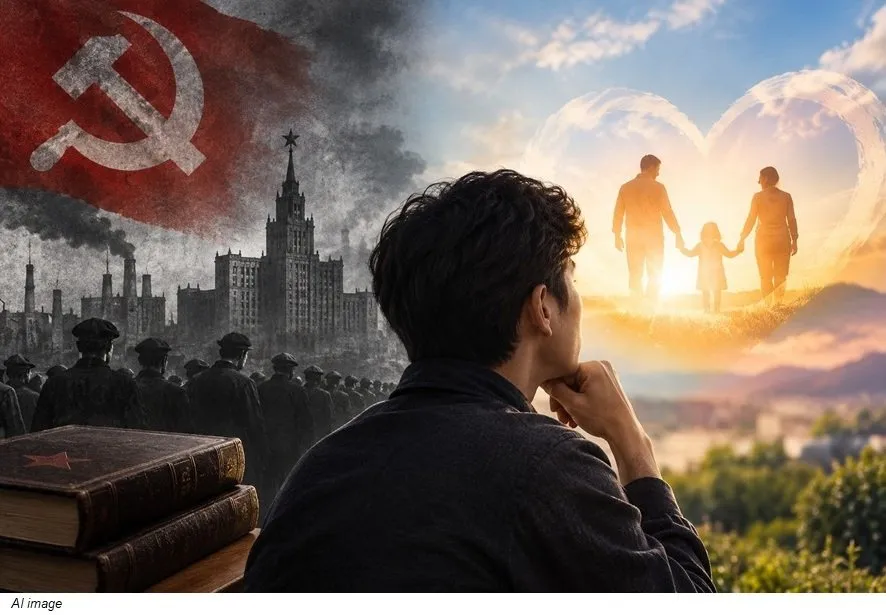
Featured image above: South Korean investigation. Illustration: Chat GPT, February 2026, edited
[Editor’s note: Shincheonji, officially known as Shincheonji Church of Jesus, the Temple of the Tabernacle of the Testimony, is a new religious movement founded in South Korea in 1984 by Lee Man-hee, who claims to be the promised pastor mentioned in the Bible’s Book of Revelation. Shincheonji teaches that the Book of Revelation is being fulfilled through its church and that Lee Man-hee has received divine revelation to interpret it.]
See also Japan: “MEXT Fabrication” Storm Grows Online
See also In Tiny Solitary Cell: Irreversible Harm Caused
See also Mother Han Released 10 Days for Medical Reasons
See also Emotional Scenes as Mother Han Is Freed Briefly
See also Religious Freedom Threat: China-Led Alliance
See also Gingrich Warns Against State Control of Faith
See also Domino Effect of Religious Persecution in Asia
See also Unificationism, Industry, and Cold War Survival
See also Current Korean Situation: Context and Key Issues
See also Court: Prosecutors’ Overreach in Politicized Case
See also S. Korea’s Troubling Pattern of Selective Probes
See also Unificationism Emerging as a World Religion
See also Alarm Over State Interference in Religion
Related to one month of special probe: Mother Han’s December Trial: Long Detention Ahead
Also related to one month of special probe: A 10-Minute Visit to Mother Han in Detention
Also related to one month of special probe: Denying Allegations: Hak Ja Han (82) in Inquiry
Also related to one month of special probe: SKorean Court’s Sharp Criticism of Prosecutors
And also related to one month of special probe: Detention: Harsh Cell Conditions Spark Outcry
More, related to one month of special probe: Ugly: Arrest Warrant Sought for Hak Ja Han (82)
And more, related to one month of special probe: Critics Warn of “Authoritarian Drift” in SKorea
Even more, related to one month of special probe: Court Decision to Prolong Detention Condemned
Still more, related to one month of special probe: Co-Founder, 82, Questioned 9 Hours by Prosecutors
Also related to one month of special probe: Democratic Party’s Assault on Family Federation
And even more, related to one month of special probe: Mother Han (82) in Poor Health in Damp, Cold Cell
And still more, related to one month of special probe: Korean Crisis: “True Democracy Must Serve Heaven”
And yet more, related to one month of special probe: Faith Leaders Protest State Assault on Religion
Also related to one month of special probe: News Release Blasts Indictment of Hak Ja Han, 82
More, related to one month of special probe: 70 Years On: Detention History Repeats Itself
And more, related to one month of special probe: Trump Raises Alarm Over Church Raids in Korea
Even more, related to one month of special probe: Mike Pompeo Calls Probe of Co-Founder “Lawfare”
Still more, related to one month of special probe: Korean Faith Crackdown: USA Urged to Confront It
Yet more, related to one month of special probe: Korean Bribery Scandal: Media Clears Federation
And also related to one month of special probe: Raids Blur Line Between Justice and Politics
More, related to one month of special probe: Heavy-Handed Raid on Sacred Sites Condemned